Usually I see an automated email in my inbox and think nothing of it, but sometimes an email comes through that sparks something to life.
Today, I received an email telling me that some researchers had ‘cited’ a piece of work I did back in 2021. A citation (past term = ‘cited) is when someone officially acknowledges that they have used your work to help them with their own work.
This piece of work I am talking about was a publication I did back in 2021. It was a story of how we had helped a family on the children’s heart ward to use their medicines. What was special about this family was that they were refugees and had very little understanding of English. My piece of work was titled “Administering medicines safely at home: using an evidence based approach to help a family with complex health needs” (click here for link).
I think because this was during the COVID pandemics/lockdowns, I didn’t really get the chance to share this work. I did get permission from the family to share some photos, and I would like to share them with you.
Their piece of work is titled “Children and young people at the intersection of chronic illness and migration: a scoping review” (click here for the link). It is really great to see that our work is fitting together with other projects, especially so if the work is about helping under-served groups of people.
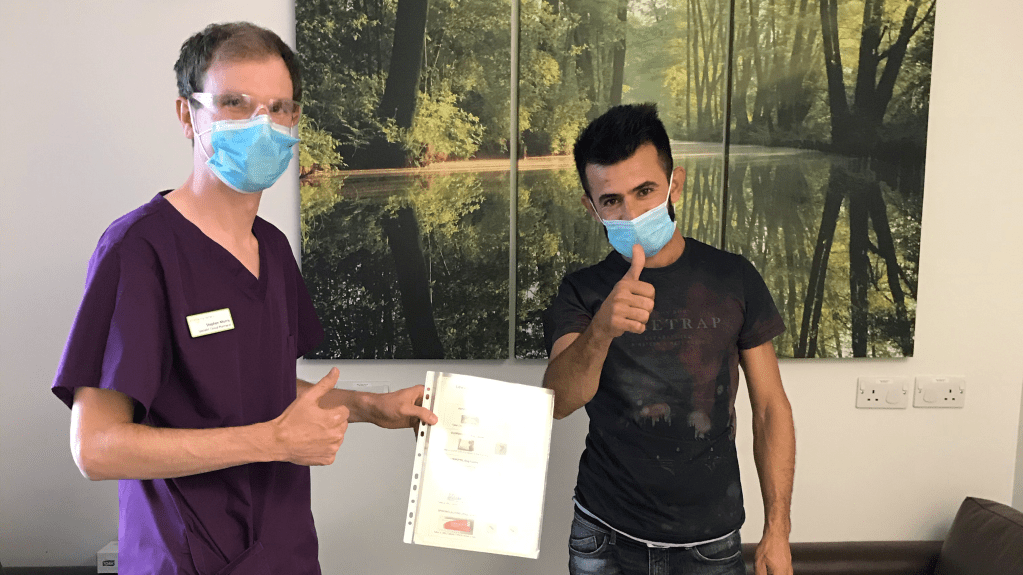
So what did we do? We met a family who’s daughter had a heart operation in hospital. They were refugees, understood very little English (written and spoken) and had very little support. What we did was to make their medicines as simple as possible, whilst still providing the same access to medicines as any other patient. Then, we provided tailor made training for them which involved:
- written information using pictures (called a pictogram),
- use of translation services (telephone and face to face interpreters),
- teach-back (a teaching method where the learner has to show the teacher what they have been told),
- rapid-cycle deliberative practice simulation (the learner completes a practice exercise, but the teacher intervenes if needed and the learner starts back at the beginning, until they complete the exercise successfully),
- a supply of medicines to last at least 3 months to make sure the packaging matched the pictogram,
- follow up in outpatient clinic.

We believe that what we were able to do for this family should be available to every family. However, as you may be able to tell, this needs a lot of resources (time, staff, equipment). As our systems currently are, staff would prioritise the use of resources, but we believe they should be available to everyone. This research project will be working towards that goal, by producing evidence of why it is needed, and then asking commissioners (the people in control of public money) to pay for it based on our evidence.
 MINIMEDs
Leave a comment