MINIMEDs is a young and small project, a bit like an infant!
If we are going to be successful we need to find people who can show us where to go and how to get there. We need to walk before we can run!
I will do two blog posts to talk about the two groups who are supporting us with our work. They both give us different types of support.
There are two main groups that support us:
- The first is called CHORAL (which stands for Child Health Outcomes Research At Leeds). These people live mainly at the University of Leeds who run projects involved in maternal and child health.
- The second group is called the NIHR Y&H PSRC (which stand for the National Institute for Health Research Yorkshire and Humber Patient Safety Research Collaboration, a right mouthful!). Most of these people are at Bradford Royal Infirmary and do all sorts of things related to patient safety.
This post is about the NIHR Y&H PSRC.
Across England, the NIHR (National Institute for Health Research, the bit of government that pays for most of the research that happens in the NHS) pays for a couple of places to become experts in patient safety.
This is really important because they can act as outside support for the NHS to look at safety. I am sure anyone using the NHS will find that people have different opinions about safety. And for NHS staff (like me), it can hard to see the wood from the trees when thinking about safety. Or even, the saying about elephants and standing to close to them!
The PSRC will be helping us by providing support and guidance for many things:
- safety theory – helping us to use the most up to date knowledge about safety, what it is, how to understand our results and how they fit with the larger world of the NHS and healthcare.
- equality and diversity – the PSRC is helping us with the design and running of the project to make sure everyone can join the study who wants to.
- interviewing – helping us to choose which questions to ask, how and when to ask them, and how to understand what the responses are that people give us.
- sharing our learning – they have big networks of people who can take what we learn and share it across the country and beyond. They will also help us with writing what we learn in a way that people can understand too (e.g. by using creative things like pictures and drawings).
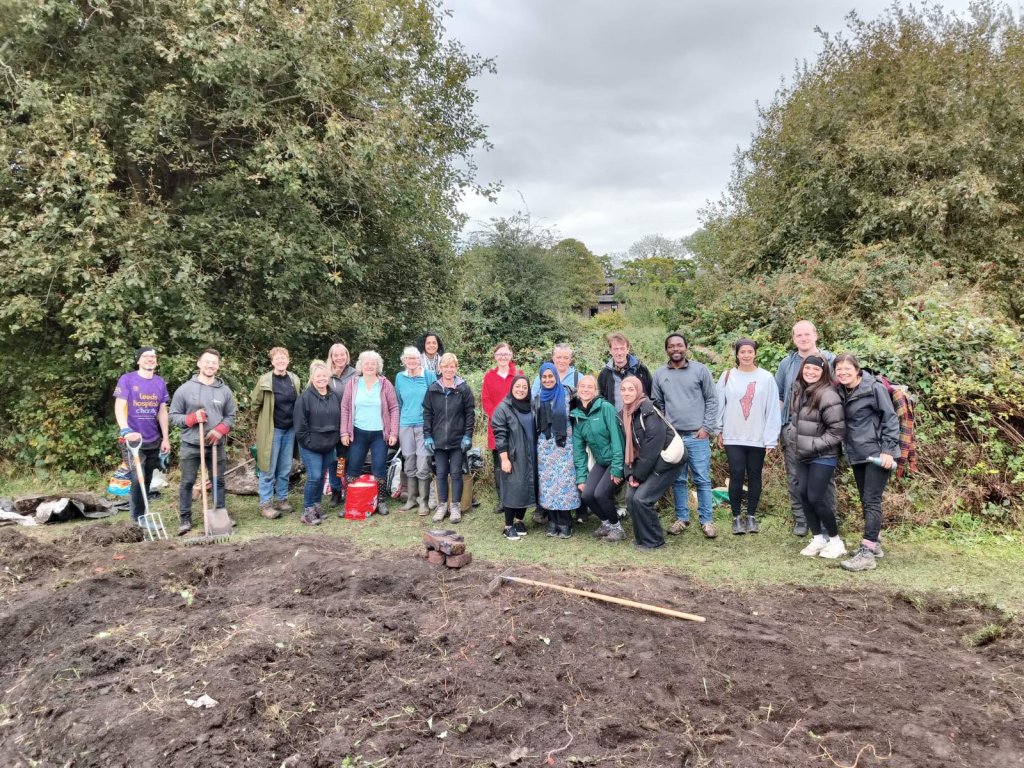
And if you’re wondering what the photo is all about? Well, last week we went on a networking day to help at a local community farm in Hordon (Hordon Community Farm). It was a great day out. I had the chance to meet many different people, and share our ideas and experiences.
Next time, I will talk about CHORAL and how they are helping us.
 MINIMEDs
Leave a comment